How to Care about Everything without Carrying Everything
Reflections on politics, the news, and the state of the world
October 4, 2026
This post is adapted from a talk I gave at Salt Lake Oasis on October 4, 2026.
In this post:
- The arc of the moral universe
- Two things can be true
- 1. How accurate is the picture?
- 2. Historical perspective
- 3. The amount of suffering we evolved to carry
- 4. Pain versus suffering: Ideas from mindfulness traditions
- 5. Where do our institutions come from?
- 6. What’s my part?
- You aren’t responsible for saving democracy
- You are responsible for showing up and doing your part
- Keep living a full life
It feels like the mood of the last decade or so has been the famous “This is Fine” meme. In the meme, a cartoon dog sits at a table surrounded by flames, sipping his coffee, telling himself: “This is fine.”
I’m not a political expert. I am a therapist, and like every therapist I know, I’ve sat with dozens of people for many hours after elections and tragedies, in distress about the state of the world. I feel humble and a little audacious speaking about a topic so big.
I don’t have a magic wand. But I have lived a fair amount of time, and have some perspectives and tools that work for me that I’d like to share.
I am not here to argue that everything actually is fine.
How “fine” things are varies for people in our community. In this community we have trans folks, parents of trans kids, LGBTQ people, immigrants—populations that have seen significant reversals. Risk is real, and it isn’t evenly distributed. I want to validate that as real and not an abstraction. It’s whether you or your kid can get health care, or if you feel the need to move for your own safety. Nothing I share should be seen as invalidating any of that.
People across the political spectrum have felt this dread in different years, about different things. These days I mostly work with “blue” clients and live in a “blue” community. But I’ve lived and worked in “red” communities too, and I empathize with a lot of what matters to people there. I consider myself tribally complex. I hope these ideas are useful to people of all political persuasions.
The arc of the moral universe
You might remember this quote from Dr. Martin Luther King, Jr.:
The arc of the moral universe is long, but it bends towards justice.
This was first written by Theodore Parker, an abolitionist minister, in 1853. And if you think of life in 1853, he would have been using a lot of imagination to see that moral arc then. But for the past 50 or so years it seems like that arc was easier to see. And right now that’s harder. There are real regressions. That’s frightening. It should be frightening. I don’t want to talk you out of that.
Two things can be true
But I do want to argue for dialectical thinking. That’s a fancy phrase for the therapist cliché: Two things can be true. This is a tool that gets us out of black-and-white thinking and into the kind of thinking that helps us stay flexible, curious, and able to actually engage with the world in a way that gives us a shot at improving things, instead of being paralyzed and hopeless.
I’ll make this point multiple times here. Two things can be true: The world is on fire—and what else?
1. How accurate is the picture?
Again, this isn’t to gaslight. There are real things to be concerned about.
I remember my high school journalism teacher on the first day of class asking us: What makes news?
The news is made of events. Something has to happen. A law passes, a plane goes down, some act of violence happens. We experience a lot of those events as negative, maybe because of the nature of reality itself. Things fall apart unless a lot of effort goes into them not falling apart. Second law of thermodynamics, law of entropy: things move from a state of order to disorder unless energy gets put into the system.
Now picture what getting better looks like. When things get better, that tends to be because some entity put energy into the system. Some committee made it their focus for years and eventually the long boring efforts of that committee pay off. And that doesn’t make the news.
About a decade ago I read two books that helped me see this picture: The Better Angels of Our Nature by Steven Pinker, and Factfulness by Hans Rosling. When things get better:
- Child mortality falls.
- A disease slowly disappears.
- Fewer people die on the roads because of some regulation no one remembers.
- Violent crime drops.
- Literacy goes up.
- The living conditions of the world’s poorest poor rise dramatically.
And all of these, by the way, are true facts about the world, as of when these books came out.
But they don’t make the news. Because they aren’t a dramatic thing that happens. There isn’t a notification that tells you that because of decades-long efforts in teaching girls in poverty-stricken areas to read, fewer of their children die of medication errors, because their mothers can read the pill bottle label. But it is also a true thing about the world, not part of the world-on-fire picture in your head.
How the news has changed
The news itself has changed drastically since Walter Cronkite read a boring just-the-facts reporting of the news. Today’s 24-hour news cycle is perhaps more entertaining, but less accurate, and definitely rougher on our nervous systems.
The news feels invested in getting people worked up about the crisis du jour. Something is always about to end everything. That drives viewership and that drives ad spend.
I can’t take it. I hate the feeling of being manipulated. So I just don’t.
And that’s not to say that apocalypses never happen. Clearly they do.
In the religious culture I grew up in, I lived through about a dozen predicted ends-of-the-world by age 40, and I had the food storage to prove it.
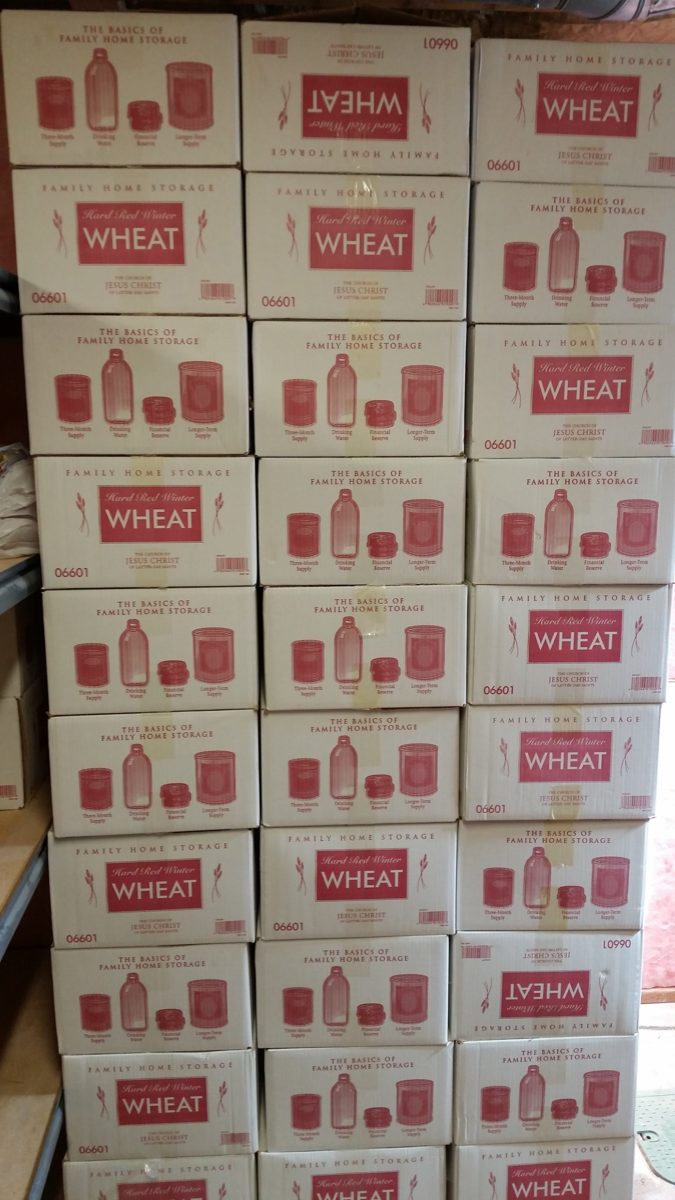
But it leads me to be skeptical of the end of the world as the expected outcome of the crisis of the day, even if the news anchors want me to believe that.
And that’s part of why I’m working on this sampler, to remind myself about the way worrisome things typically turn out:
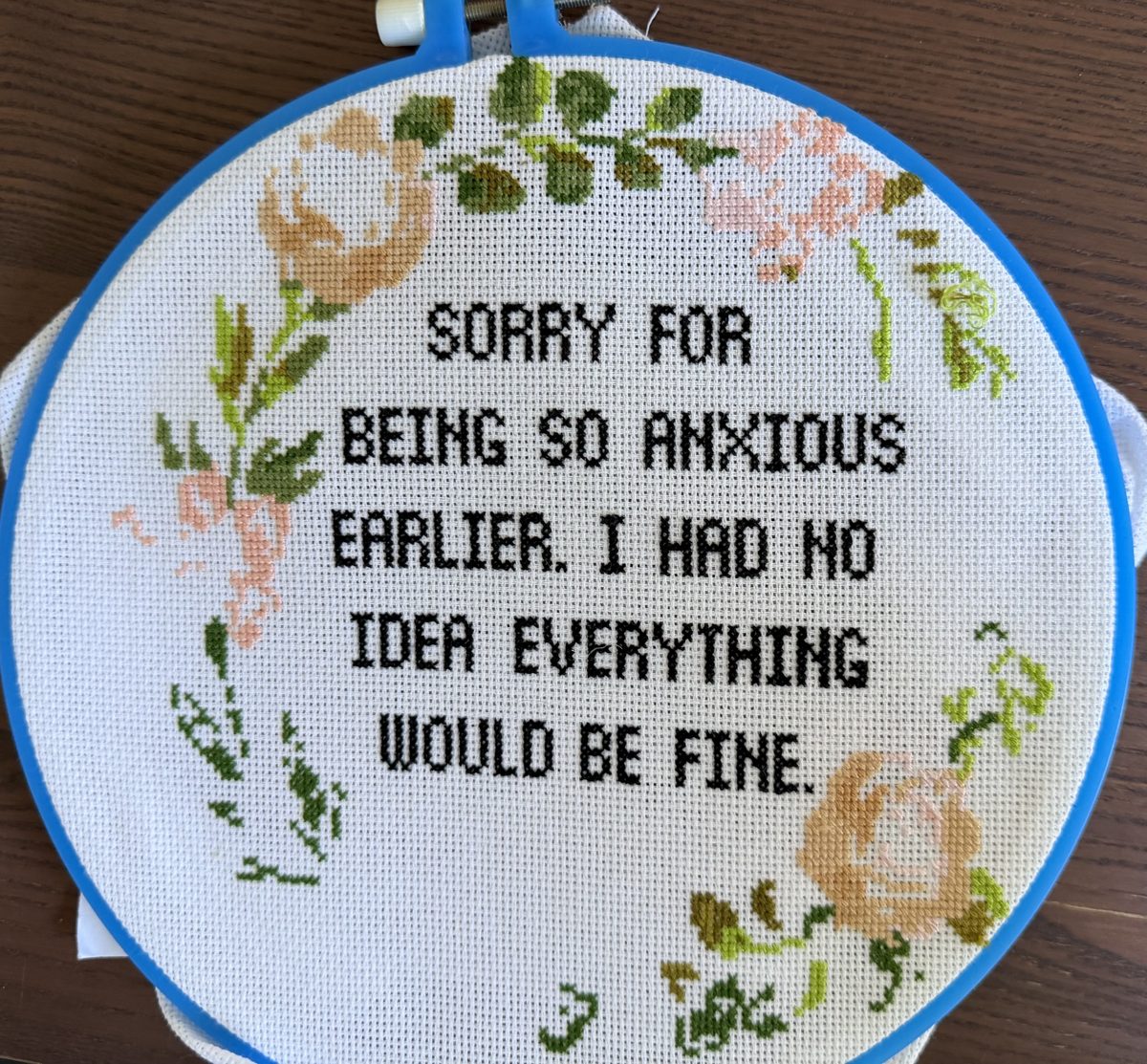
🧰 How likely is the feared outcome?
When you are worried about an apocalypse, one tool that can help comes from the book Thinking in Bets by Annie Duke. Ask yourself: How likely is this to happen? Seriously, put a number on it. What percent chance do you estimate this thing will happen? Even if your estimation is wrong, the very act of thinking about it quantitatively means you are more likely to be aligned with reality, and less likely to be acting out of pure fear.
🧰 Will knowing more about this change anything I do?
When you are in distress doomscrolling, ask yourself: Will the next article or video change any action I take?
That’s not the same thing as: is this important, or do I care about this.
Occasionally the answer actually is yes. In March 2020 I read a lot to see if it was safe to go outside. Or, sometimes you research candidates or initiatives to know how to vote.
But that’s not how doomscrolling works. Doomscrolling doesn’t give actionable information.
I’ve noticed that perspective really isn’t available if you’re stuck in the doomscrolling churn. When you take a breath from it, you see things differently and I think more accurately.
🧰 Curate your news consumption
If you like this way of thinking, I borrowed it from a Mark Manson article from a few years back: Why You Should Quit the News.
I’m not prescribing that. For some of us, the news feels more like self-defense than hobby. You are the best judge of what works for you.
But I do want to give permission for quitting the news as a state of being. You can both quit the news and deeply care about the world and be engaged in making it better.
Quitting the news entirely may be too extreme for some, but everyone can curate their news consumption. There are more and less sensational ways to get informed. Make choices to get your news in ways that are more accurate and less activating to your nervous system. At our house, that looks like subscribing to a non-partisan weekly news magazine.
If the doomscrolling keeps pulling you in, be curious about that. How is it serving you? Slow down the process. Check in with your body at different parts of the cycle; what are you feeling?
2. Historical perspective
Two nuances before I dive in.
This is not to say: People in the past had it worse, so buck up, sissy pants.
And it’s also not to say: History shows that everything works out in the end. Clearly, sometimes, for some people, it doesn’t.
But, looking to the past can help us feel less alone. Studying history gives us lots of examples of human resilience.
Examples are all over history, perhaps also in your own family’s history. To pick just one example, let’s look at the people living through the London Blitz in spring 1941.
When we think of World War II today, there’s a romantic greatest-generation patina. We know who won.
But put yourself in the shoes of the people in it. Bombs are falling on you every night and your country can’t defend against them. You are sleeping in a shelter. France fell last year. It took about six weeks. Britain is alone. The Americans have said they aren’t coming.
And that’s just current events. Look at what you already lived through. The previous war was 23 years before, and it killed not only about ten million soldiers, it also killed the survivors’ sense of it meaning anything. Then influenza came through and killed tens of millions more, young healthy people who were dead within hours. Then the Depression not only led to widespread unemployment, but the kind of poverty that led to poor health and the abandonment of children and families because of not being able to afford to care for them. And by 1941 that had been going on for 12 years with no end in sight.
Then let’s look at the background of regular life then. There were no vaccines, no antibiotics, primitive obstetrics, and little birth control. People died of routine things now easily preventable.
They were carrying all of this.
They had to live, not knowing how things would work out. Now we know the Allies won. They didn’t know that. Some of them hoped, but it wasn’t a very reasonable hope. Many thought they would lose.
And yet they had to live during that.
People got married, had babies—sometimes even on purpose. They danced and threw parties and made movies and planted gardens and played football and made art. Some of them got drafted or worked in factories or organized or hid people and rebuilt the things that got bombed and did all of the unglamorous work that eventually made the world we have today.
Both, at the same time.
Calamity and ordinary life have always coexisted
We can look at history and see that people don’t get the luxury of having the world stop being scary so they can build a life. They had to figure out how to act in the world that is. And that helps me have hope that we can too.
We have done this ourselves not too long ago. In March 2020, I thought, This could be the real apocalypse. I do study history, and viruses are a real wild card; they have drastically shaped history in unpredictable ways. No one knew how bad it would get. The forecasts were terrifying.
Or the 2008 financial crisis, if you were paying attention then. The people who understood the financial system best were genuinely afraid it would fall apart.
Both of those were genuinely bad. Many people did die or become disabled from Covid. Many did lose jobs or homes in the Great Recession.
The power of ordinary motivated people working together
But I notice, usually I underestimate the power of motivated humans working together. In Covid, millions of people whom I will never meet worked to make things better, developing a vaccine in record time, figuring out how to keep supply chains open, using ingenuity to keep their businesses open (inventing cool things like curbside pickup), or showing up to educate our children. It helps me to remember that masses of motivated humans really can move the needle.
Acting without knowing how it turns out
What I take from these real historical people is acting and living without the certainty of how it turns out. We have to live in the here and now without the assurance that things are going to be okay. Simone de Beauvoir, who lived through the occupation of Paris, wrote about exactly this: having to act with no guarantee of how things will turn out. This idea is called existential courage.
It’s a type of faith—not faith in a guaranteed outcome, but an understanding that it’s worthwhile to work to build a better world even if we don’t know if it will pay off. You act, and then you find out. Sometimes you don’t find out at all because some of these efforts are on a longer time scale than we are.
Those 1941 people were created from the same DNA as we are. They weren’t braver than us. They were finite, tired, inherited a mess they didn’t ask for, and rolled up their sleeves to do the work anyway.
Why not us?
3. The amount of suffering we evolved to carry
One reason this is so hard to carry is that we never evolved to carry the weight of all the world’s problems.
For most of human history, you knew a hundred to a few hundred people. Our social brains were built for that scale, to keep track of the people in a small community and their suffering.
Think of a small town, a tight-knit congregation, or a big extended family. For those with an LDS background, think of a ward.
You knew what was going on in the community. You knew who had a premie in the NICU and whose husband was on dialysis and who was looking for work. Maybe you knew before hearing the announcement in Relief Society.
And crucially, you could do something. You could babysit the other kids, visit and have a supportive conversation, help organize the funeral, or bring a casserole. You could feel like you were contributing, because you were.
You knew about people’s suffering, and you were able to help, all in the same package.
Then in the past 100 or so years, those stopped going together. Now in an instant we can see a video of someone’s suffering on the other side of the world. But you can’t bring them a casserole.
Our awareness went global. Our capacity didn’t.
And overall, this global awareness is good. Seeing people on the other side of the world as real people helps our morality evolve and gets us out of our tribal bubbles.
But our nervous systems didn’t evolve for this. So we suffer.
🧰 Circle of concern versus circle of control
One tool that helps with this mismatch comes from Stephen Covey’s The 7 Habits of Highly Effective People.
Imagine concentric circles. The outer ring is the circle of concern: everything you care about. That ring is enormous because of everything we’ve been describing. The innermost ring is our circle of control: the things you can actually have an impact on. In between is the circle of influence: the things you can affect, even if you can’t control them.
We live in the gap between those rings, between caring and being able to affect and influence. That’s part of the deal of being human. We are finite creatures. You can care deeply about that person on the other side of the world, and not be able to practically help much at all.
But we do have the power to help uniquely in our own sphere. Your child needs you in a way that no one else can replace. Our family, our partner, our work, our community, our citizenship. Fulfilling the commitments we have made in our lives is something no one else can do for us, and makes a big impact on the world. And there are some seasons of life where fulfilling just these commitments takes all of our energy.
4. Pain versus suffering: Ideas from mindfulness traditions
Those of you who have dabbled in Buddhist-adjacent spaces will recognize some of these ideas.
🧰 First and second arrow
The Buddhists have the concept of the first and second arrow.
The first arrow is the thing that happens: in this context, the election, the tragedy. We can’t avoid this.
The second arrow is how we respond or relate to that thing: the story we make up about what happens, our judgment about why that shouldn’t have happened. We can avoid this. We can slow down the process and examine the thoughts and beliefs that are contributing to our suffering.
🧰 Radical acceptance
Related is the idea of radical acceptance, one of the tools of Dialectical Behavior Therapy (DBT). Radical acceptance is acknowledging and accepting reality as it is, without fighting or denying it.
Radical acceptance is not approval and not resignation. It’s not saying that the way things are is okay. It’s just saying, this is what it is.
This idea is related to the Buddhist concept of dependent origination: there’s a whole chain of events from the dawn of time till now that led to the world being as it is. How could it be any different?
Radical acceptance allows you to act in the present and respond to the world as it is, without being distracted by what should be but isn’t. You can only act in the real world, not the made-up world we imagine should be.
5. Where do our institutions come from?
So if we are trying to accept the world as it is, let’s talk some more about how the world got to be the way it is.
We tend to take our institutions for granted. If you are thinking about the sewer system, something has gone very wrong. But it turns out that a working sewer system takes a lot of human effort to plan and build and maintain.
Many of us are guilty of taking our government for granted.
Working institutions are a bizarre and difficult human achievement
When our government system works, amazing things happen. Votes get counted (mostly, probably). The person who loses the election leaves quietly. Courts rule against the government, and the government complies. People can say the president is a criminal and not get imprisoned. Political enemies can settle things without anyone dying.
This isn’t humanity’s default setting.
Most societies in most of history did not have a government that worked like this. We shouldn’t take it for granted.
So where did our government and other institutions come from? They did not burst forth fully formed from Zeus’s head like Athena.
People created them.
In the United States, the founders had the audacity to start this experiment, at risk to their lives, fortunes, and sacred honor.
And since then we have had two and a half centuries of people wrestling with each other. Voters, organizers, strikers, protestors, writers, speakers. People brought court cases, lost, tried again, lost again, tried again. Over and over for decades. The people for whom the system was not working kept speaking up, even when things looked bleak.
Democracy is messy
This wrestling is a feature, not a bug.
Sometimes people imagine that winning politically would mean their team in power forever and ever. But that wouldn’t be a good government either. Any group that’s in power too long develops blind spots. There’s no mechanism for them to find out where they are wrong. There’s the idea of needing both a left wing and a right wing to fly a plane.
(This is not both-sides-ism. “Both sides” are not the same. Also this isn’t binary. This is just encouragement to see the complexity.)
A republic, if you can keep it
Which is why I keep coming back to this quote attributed to Benjamin Franklin: A republic, if you can keep it.
It’s on us to keep it.
We aren’t exempt from our turn in the wrestle.
Back to the arc of the moral universe idea. Obama reflected on this last year:
The arc of the moral universe is long, but it bends towards justice. Except it doesn’t bend on its own—it bends because we pull it in the direction of justice.
It doesn’t happen automatically. Just like democracy is not self-executing. It requires effort. It requires will. It may be bumpy and it may take time.
That’s one of my convictions that I try to act on every single day. It’s a leap of faith that I think is worth making.
6. What’s my part?
Mother Jones, a labor organizer in the late 19th and early 20th century, called the “grandmother of all agitators” (what an awesome tagline), said something I think about in this context:
Pray for the dead, and fight like hell for the living.
By pray for the dead, I think: mourn. Grieve. Don’t be paralyzed by current events. Do let them affect you.
But don’t stop there. Act. Fight. Figure out what’s yours to do, and do that thing.
This is similar to the Serenity Prayer flow chart that I’ve talked about here before. I think most mental health boils down to accepting what you can’t change, and changing what you can.
So what are ways we can act, or fight?
🧰 Vote
If you can’t vote, this isn’t aimed at you.
For everyone else, voting is one of the cheapest ways you can act like you want to keep this republic.
I hear a lot, especially from younger people, that voting doesn’t really make a difference.
Participate anyway. Because you’re a citizen, and that is a privilege. Because that’s what we do. Most folks throughout history haven’t had the opportunity to participate in their government, and how cool is it that we do. Because that’s part of that leap of faith.
And maybe in the big picture, voting is use-it-or-lose-it.
Maybe it is true that one individual vote rarely decides anything. But you aren’t only an individual. You are part of demographic cohorts—other people that are your age, gender, race, ethnicity, etc. If your cohort stays home, that absolutely can and does affect election outcomes.
In recent elections, younger people have been about 30 percentage points less likely to vote than older people. Politicians notice. It gets processed as: these people can be ignored.
Opting out of voting is not an effective protest.
If you’re not sure if you’re registered, find out today. In Utah, that’s at vote.utah.gov. The deadline to register is October 23. Or you can vote in person on Election Day if you bring two forms of ID.
I’ll tell you a secret. If you don’t vote, I kind of don’t want to hear your complaints about how things are. I mean, I’m a pro and I’ll never let on, but now you know that I’m secretly judging.
🧰 How else can I act?
So if voting is the floor, what are some actions that are higher than the floor?
There are lots of different ways to participate in democracy.
Channeling more Mother Jones, usually people think of protests first thing. These are useful and helpful. But I have heard of people who feel disillusioned about protests lately, feeling that they haven’t changed enough fast enough, or not feeling safe enough at them.
Please keep protesting if you are so inclined!
But my clientele tends to be a lot of highly sensitive introvert spectrumy type folks, and protests tend not to be a great fit for them. Luckily there are other ways to participate.
Writing to representatives is more impactful than you think. I wrote my Utah representative this year and she actually wrote back and asked for my opinion. How cool is that!
Often there are organizations that advocate for the issues you care about, that send out calls to action when important votes are happening in the legislature. They send out suggested letters that you can personalize. This can help you stay informed and participate.
Donating money, especially regularly, especially if you have surplus funds, can help amplify voices you care about. (Please don’t put yourself at financial risk to donate.)
Participating in local government. Every month there’s a city council meeting and a school board meeting and just a handful of people who attend. Locally is where one informed person really can make a difference.
There are also less formal ways to make a difference that people tend to dismiss.
Sharing your voice, whether in writing or speaking, especially in ways that are less likely to trigger defensiveness in others, helps shape the opinions of people in your community.
And building community helps a lot. The communities that have the most influence politically tend to be the most organized. And crucially, it helps our mental health when we are part of a community. We can give and receive support and know that others have our backs. For those of you who participate in Salt Lake Oasis or other local communities—look at you, building community. Go us!
🧰 Resist polarization and tribalism
One big way the world has changed in the past thirty years and especially the past ten is increased polarization. When my parents were young, people lived in communities with folks on the opposite side of the political aisle. You went bowling with your neighbor who didn’t vote the way you did but you knew he was a good guy.
These trends have changed quite a bit, and now we are more likely to demonize people who don’t vote the way we do.
And again—two things can be true. It’s hard to feel close to people who are working against what you hold dear: your health care, bodily autonomy, faith, livelihood, or the right to commit to the partner of your choice. And it’s hard to stay nuanced about the person in front of you if they are demonizing you.
But, reaching across the aisle has to start somewhere. If you can stay open to the humanity of the person in front of you, being curious about their point of view, even when it’s hard, that person is more likely to respond with curiosity instead of judgment, and is more likely to return the favor with curiosity about you.
Not everyone will.
Be the change you want to see in the world. It’s small actions like these that change hearts and minds over time. For those of you whose opinion about gay marriage changed over your lifetime, it was likely these personal connections that helped the change happen.
In addition, resist tribalism and polarization within yourself. It’s easy to farm out your political point of view to a party or movement. Resist that. Cultivate your own points of view. Be curious about other ways of seeing things, and hold those other ways of thinking in tandem with your own. Be on the lookout for narratives that are too simple, and look for ways to complexify them.
You aren’t responsible for saving democracy
We can’t do that by ourselves. It’s honestly a little grandiose to think that you can. The idea that we are single-handedly responsible for saving democracy causes a lot of suffering, anxiety, paralysis, and guilt.
You are responsible for showing up and doing your part
Again, I think of those 1941 people: tired, frightened. Finite. Not knowing if any of this effort would pay off. And showing up anyway.
That’s where we are. But we aren’t alone here. We are with past generations, who faced this anxiety, and acted anyway.
Keep living a full life
And like those 1941 people, keep living a full life. Love your people. Teach your kids. Have fun with your friends. Travel.
Pay attention to those items that are uniquely yours in that center ring of your circle of control.
You’re allowed to be happy even if something bad is happening somewhere.
In summary,
- See what is as clearly as you can.
- Accept what you can’t change and grieve it.
- Do what you can.
- Join with others.
- Keep building a life.
You don’t need to suffer to prove that you care.